BEST CITIES
Ir Yamim vs Shirat Hayam: Choosing a Coastal Neighborhood in Netanya
June 26, 2026 · 10 min read
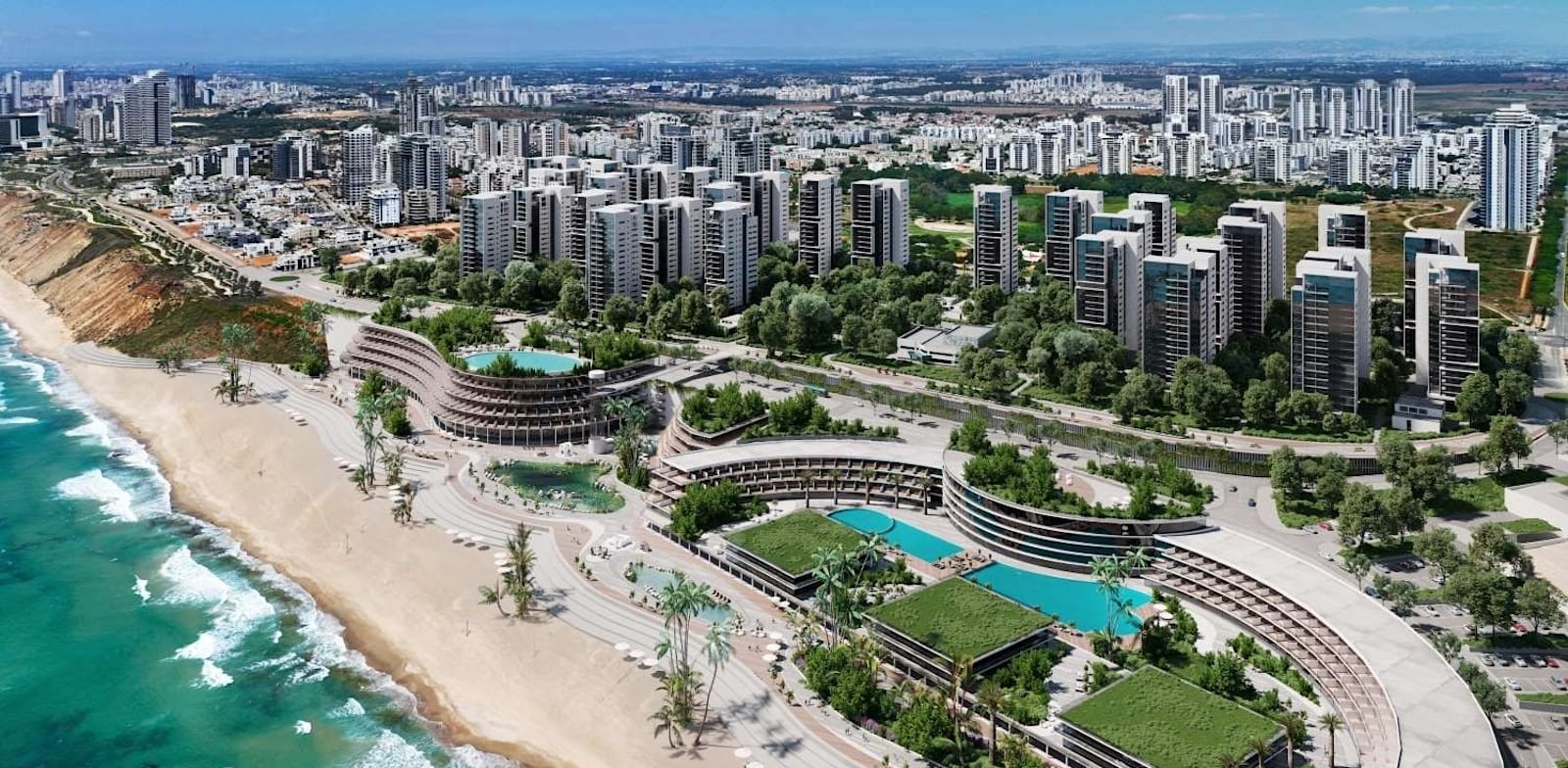
A neutral, data-led comparison of Netanya's coastal neighborhoods, Ir Yamim, Shirat Hayam, Agamim, and Nat 600, to help overseas buyers match the right area to their timeline and family.
Most overseas buyers who fall for Netanya fall for the sea first. Then the real question arrives. Do you buy in Ir Yamim, the established beachfront neighborhood with the mall, the parks, the Piano Center, and a working Anglo community, or in Shirat Hayam, the new neighborhood rising on what is widely described as Netanya's last unbuilt first-line coastal land. They sit side by side on the southern coast, separated only by a nature reserve, and they attract many of the same families. They are also very different purchases.
I grew up in Netanya, and I represent both buyers and sellers here, so I have no reason to push you toward one project over another. What follows is how the two neighborhoods compare on the ground, with Nat 600, Agamim, and the near-coastal areas for context, so you can match the right area to your timeline and your family rather than to the nicest show apartment. For the wider picture, you can also read the full Netanya neighborhood guide.
Ir Yamim: the established coastal address
Ir Yamim is the finished version of what Shirat Hayam is being built to become. Construction began in 2006 on the dunes of Netanya's southern coastline, and the neighborhood took its name from its very first project, six buildings marketed as Ir Yamim. Two decades later it is one of the most complete pieces of urban planning on the Israeli coast.
Two design decisions explain much of its appeal. First, the street grid is shaped like a plus sign, two flat, walkable spines crossing at the center of the neighborhood. You can walk from the eastern edge to the sand, about 1.1 kilometers, on a continuous flat path with separate lanes for bicycles and scooters, whatever your age or the condition of your knees. Second, the whole neighborhood sits tilted relative to the coastline, and the towers are spaced generously apart. The practical result is that sea views reach deep into the neighborhood instead of belonging only to the first line.
Daily life is already built. The Ir Yamim Mall, the largest in the city, anchors the eastern entrance with two underground parking levels, a bowling center, and an office tower with a major gym above it. Beside it sits a sports park with a tennis center, new padel courts, basketball courts, and an outdoor gym. And at the crossing point of the plus is the Piano Center, an open-air dining and leisure complex built around a landscaped square that hosts small artist shows and community events. Cafes, a wine bar, kosher restaurants, and boutique shops fill it through the week. It has quietly changed how people buy here. Families now tell me their first priority is to live next to the Piano, sometimes ahead of being closer to the sea, because that is where their friends are on a Thursday evening.
The community layer is just as established. Tefilat Yamim draws hundreds of English speakers on Shabbat and is working toward a permanent building. A new Chabad center opened steps from the Piano. Hechal Eliyahu serves the Sephardic community, and French and Spanish speakers are here in numbers as well.
The northern border of the neighborhood is the Iris Nature Reserve, protected land with walking trails and seasonal blooming that cannot be built on, so apartments facing it keep their green view permanently. On the water, Poleg Beach is one of the few flat beaches on this stretch of coast. There is no cliff and there are no stairs. You can park close to the water and walk onto the sand, which matters more than people expect, both day to day and as buyers think ahead. A boutique hotel of about nine floors is planned beside the promenade with shops and restaurants. The project has moved slowly and is currently paused, but it remains part of the neighborhood plan.
On prices, as of mid-2026 and as indicative ranges rather than valuations: practical three-bedroom apartments in the southern, more functional part of the neighborhood start around ₪3.7 to 3.8 million, with most trading above ₪4 million, and four-bedroom apartments from roughly ₪4.5 million. On the reserve-facing northern line along Uzi Hitman, where buildings typically include a pool, a gym, and a 24/7 concierge, three-bedroom apartments run about ₪4.8 to 4.9 million and four-bedroom apartments roughly ₪5 to 5.7 million. Mini penthouses commonly sit around ₪6 to 6.5 million, and large, unique sea-view apartments reach ₪8 to 9 million. In the newest construction, 145 square meter apartments in the Yama project that began around ₪5 to 5.5 million on paper now trade at ₪8.5 to 9 million. A useful rule of thumb: the farther from the sea, the more room there usually is to negotiate.
One local habit is worth knowing. Some buyers deliberately choose buildings without pools and gyms to keep monthly building fees low, then join the Poleg Country Club on the neighborhood's edge, which has a pool, a gym, tennis, and padel courts. Membership availability is tight, so check before you count on it.
Shirat Hayam: the last beachfront land, bought on paper
Shirat Hayam picks up where the Iris Reserve ends. It is a new beachfront neighborhood being built on Netanya's last unbuilt first-line coastal land, between the reserve and South Beach. The city has renamed it Shirat Miriam in memory of Miriam Feirberg-Ikar, Netanya's longtime mayor, though most marketing and most buyers still say Shirat Hayam, so expect to see both names.
The land itself has a story. For decades this site served as the city's landfill, and the ground then went through roughly twenty years of rehabilitation before construction could begin. What was once the least wanted land in Netanya is now its most closely watched address.
The master plan covers about 1,850 residential units, with most buildings planned between roughly 12 and 16 floors. Around 1,100 hotel rooms sit on the first line, seaward of the housing and deliberately lower than it, so residential sea views stay open. A school sits at the heart of the neighborhood, alongside a shul, retail, green corridors between the buildings, and a seafront boardwalk of roughly 700 meters. Across Ben Gurion Boulevard, a pedestrian bridge connects the neighborhood to the winter pond park, a nature area with a seasonal pond, playgrounds, and barbecue lawns. On the other side is the Iris Reserve. Few new neighborhoods anywhere sit between two protected green spaces and the sea.
The first sales show where the market has placed it. Sea Aviv by Aviv-Melisron, two towers of 15 and 16 floors and the first project to market, has sold nearly a full tower at roughly ₪50,000 to 53,000 per square meter, with four-bedroom apartments on the upper floors closing around ₪7.5 to 8 million. Those numbers sit at the level of the newest first-line construction in Ir Yamim. The buyers are not only from abroad. Israeli families are purchasing here as well, which says something about how the local market reads the plan. Boaron is building too, and additional lots will come to market with their own pricing, generally lower as you move back from the first line.
The important part is how you buy it. Shirat Hayam is sold mostly on paper, which Israelis call buying from the contractor, directly from the developer before the building is finished. That changes the purchase in three concrete ways.
Your money is protected by law. Under Israel's Sale (Apartments) Law, a developer cannot take more than about 7 percent of the price before giving you a bank guarantee, and every payment after that is secured by a guarantee you can redeem if the developer fails to deliver. Never transfer a payment without receiving the matching guarantee.
You pay in stages over years, and part of the price can move. New-build contracts are usually linked to the construction inputs index, the madad. By law, only the construction-input portion can be linked, it is capped at a maximum of 40 percent of each payment, and linkage stops at the contractual delivery date. On a ₪3 million apartment that means roughly ₪1.2 million is exposed to the index, not the full price. How much that portion moves depends on the index over the build period, which is why the linkage clause is worth reading closely before you sign. Because payments run over several years, it is also worth planning your currency transfers around them.
You are buying a plan, not an apartment. The finish, the layout, and the fixtures are defined in a binding technical specification, the mifrat techni. Anything you want changed has to be agreed in writing, and upgrading after the fact usually costs more than negotiating it in.
Living here will also be practical sooner than people assume. The neighborhood exit sits about 1.5 kilometers from Highway 2, a couple of intersections and you are on the coastal road. Off peak, Tel Aviv is roughly 25 to 30 minutes by car and the Herzliya tech corridor about 12 to 17. Delivery for the current projects generally points toward 2029, with exact dates set out in each contract.
Nat 600, Agamim, and the value alternatives
Not every coastal buyer wants a first-line high-rise, and not everyone needs to buy on paper. Three other areas come up often in the same conversations.
Nat 600, also called South Beach or Nof HaTayelet, borders Shirat Hayam to the north. The pattern here is houses and villas at the front with high-rises behind them, which means apartments from roughly the fifth or sixth floor up enjoy open sea views that cannot be blocked. The cliff-top promenade runs about three kilometers through the neighborhood, a beach elevator is being added beside the Island Hotel, and Lagoon Beach sits below. The honest trade-off is that daily services are thin inside the neighborhood, few shops and no schools within it, which is exactly why people who want a quiet, vacation-paced life choose it. Three-bedroom apartments in older front-line buildings have traded around ₪3 million, mainstream newer projects run roughly ₪4 to 5.6 million, and large new sea-view apartments reach ₪6.3 to 7 million.
Agamim sits inland, east of Shirat Hayam. It is modern and family-oriented, priced below the first-line towers, and suits families who want new construction and space without paying beachfront premiums. It sits right on the other side of the "Winter Pond Reserve".
Ramat Poleg, on Ir Yamim's southern border, is where many buyers find semi-detached houses and villas near the coast, plus the country club. It shares much of the Ir Yamim lifestyle at lower prices per meter and is worth a look if Ir Yamim is close to right but above budget.
Side by side
Here is how the main coastal options compare at a glance. The figures are indicative mid-2026 ranges, not valuations.
Matching the neighborhood to your situation
A few patterns hold up well on the ground.
If you are making Aliyah soon and want to land in a working community, Ir Yamim is the path of least resistance. The schools, the shuls, the mall, and the Piano are already there, and you are not coordinating a build from abroad.
If you are buying a safety apartment or a long-horizon second home and you are comfortable waiting a few years, Shirat Hayam offers new first-line construction on land that is not being made again, at prices the first sales have already tested. The cost of that is patience and a contract that needs careful reading.
If you want space and value more than a beachfront address, Agamim and Ramat Poleg usually give you more apartment, or a house, for the money.
If you want quiet, views, and a boutique feel, walk the Nat 600 cliff line before you decide anything.
These are starting points, not rules. The right answer depends on your budget, your timeline, how often you will actually be in the apartment, and whether you are buying to live, to rent, or to hold. Foreign residents pay more purchase tax than Israeli first-time buyers, so it is worth reading how purchase tax works for foreign buyers before you set a budget.
Questions worth asking before you commit
Whichever neighborhood you lean toward, a short list of questions saves most of the expensive surprises.
In Ir Yamim and other resale areas: what is the real line to sea and floor, how old is the building, does the apartment have a mamad, and what are the monthly building costs, especially in towers with pools and full facilities.
In Shirat Hayam and any off-plan project: who is the developer and what have they delivered before, what does the bank guarantee cover, how is the index linkage written, what exactly is in the technical specification, and what is the contractual delivery date and the compensation if it slips.
For any new build, Israeli law also gives you protection if delivery is late. After a one month grace period past the contractual date, the developer owes you compensation that rises the longer the delay runs. That is useful to know, but it is far better to choose a developer who delivers on time than to rely on it.
Frequently Asked Questions
Is Ir Yamim or Shirat Hayam the better choice for an overseas family?
How much do apartments cost in Ir Yamim and Shirat Hayam?
Why is Shirat Hayam also called Shirat Miriam?
What is the Piano Center in Ir Yamim?
What does buying on paper in Shirat Hayam involve?
Is the construction index a risk when buying off plan?
Do I pay VAT on a new apartment in Shirat Hayam?
Which Netanya neighborhood suits retirees or quieter living?
Can a foreign resident buy in these neighborhoods?
When will Shirat Hayam be ready?
This article is for general information and reflects market data as of mid-2026. It is not legal, tax, or financial advice, and the price ranges shown are indicative, not formal valuations. Project details, timelines, and regulations change. Please confirm the specifics for your situation with a licensed professional.