BEST CITIES
Same Budget, Three Cities: Netanya vs Tel Aviv vs Herzliya
July 17, 2026 · 10 min read
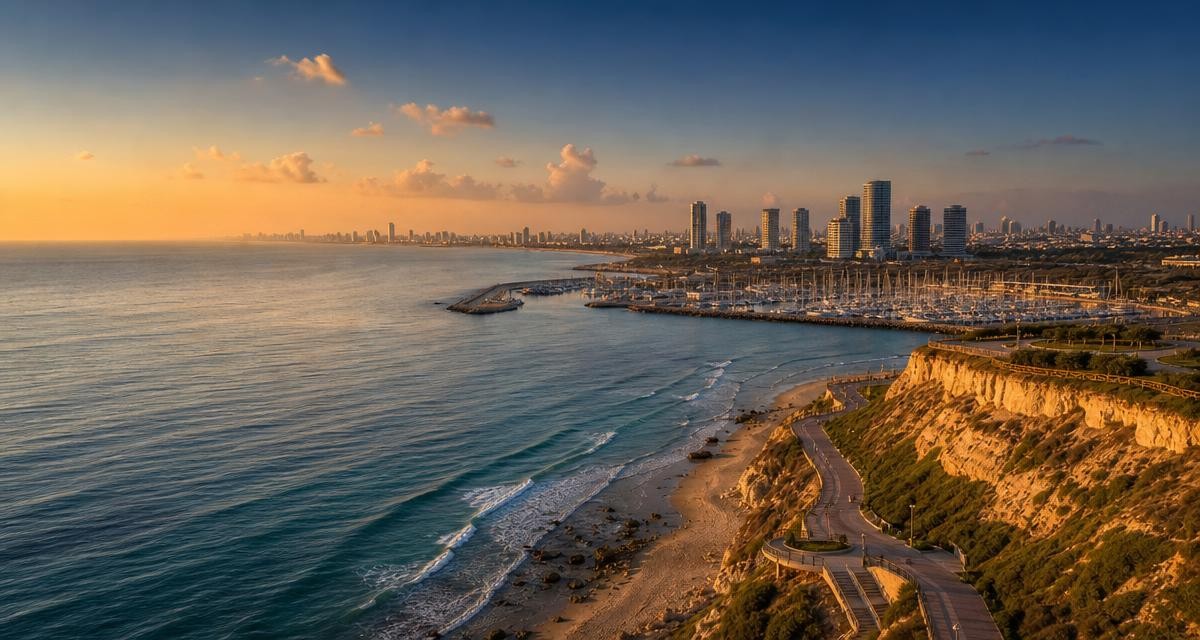
One budget, three coastal cities thirty minutes apart. What the same money buys in each, what each city honestly wins, and three questions that decide it.
Half of my first calls about Netanya turn into this conversation within ten minutes, because it is the real decision most families are making: not whether to buy in Israel, but where on this thirty-minute stretch of coastline the money should land. Tel Aviv, the center of everything. Herzliya, just north, with the tech corridor. Netanya, fifteen minutes further up, with fourteen kilometers of beaches. One highway and one train line connect all three.
So let us do the comparison properly, with numbers, honest columns for every city, and no winner declared. You will declare your own by the end, which is how it should be.
The headline gap
As of mid-2026, and as an indicative pattern rather than a rule: for comparable coastal living, Netanya typically runs 50-65 percent below Tel Aviv(per square meter). Herzliya sits between them, usually 30 to 40 percent above Netanya. That single sentence is most of this article. Everything below is what it feels like in actual apartments and actual weeks.
One caveat belongs next to the headline number, because honesty about ranges is the whole point of publishing them. These are patterns across comparable coastal property, not a law of nature. A renovated gem in an unfashionable Tel Aviv pocket and an overpriced tower in Netanya can privately swap places on any given week. The pattern holds across the market. Your specific apartment is always its own negotiation.
One budget, walked through three cities
Take ₪5 million, roughly a million and a half dollars, and go shopping.
In Tel Aviv, ₪5 million buys a solid three-bedroom in a decent area, most likely not near the water, quite possibly in an older building, sometimes with an urban renewal story attached. A genuine sea view at this number in Tel Aviv is close to a unicorn.
In Herzliya, the same money reaches more comfort: a good three or four-bedroom in a pleasant area. But Herzliya Pituach and anything near the marina belong to a different budget conversation entirely, and the sea view question remains difficult.
In Netanya, ₪5 million changes weight class. On Ir Yamim's reserve-facing line it buys a four-bedroom in a building with a pool and a 24/7 concierge, a flat walk from a flat beach. At South Beach it reaches large newer apartments with open sea views. On Nitza, it buys the view twice over. Same shekels, different physics.
What Tel Aviv honestly wins
Pretending Tel Aviv has no case would insult your intelligence. It wins on job density, on the depth and speed of the rental market, on culture and nightlife at the doorstep, and on walking-distance everything for the stage of life that wants exactly that. If your daily life runs on that energy, the premium is simply the price of the product, and it is a real product.
What Herzliya honestly wins
One thing above all: proximity. If your office sits in the Herzliya Pituach tech corridor, living minutes from it carries a value you feel every single morning. Around that sit quieter streets than Tel Aviv, green pockets, and well-regarded schools. What you accept is paying most of the Tel Aviv premium without the full Tel Aviv product.
What Netanya honestly wins
The meter, obviously. But the part people underestimate until they visit is what the meter buys beyond square footage. An English-speaking community that is already built, with shuls, cafes, schools, and a daily life that runs substantially in English, at a depth neither Tel Aviv nor Herzliya offers. Fourteen kilometers of beaches, including the only flat one on this stretch of coast. New neighborhoods rising on the region's last first-line land. And a train that reaches Tel Aviv in about 25 minutes for the days you want the big city, which, ask anyone who made the move, turn out to be fewer than they predicted.
The same walk again, at ₪3 million
Because not every family shops at five. At ₪3 million, Tel Aviv offers a small two or three-room apartment, usually older, often in a building whose main story is the renewal it is waiting for. Herzliya offers a modest three-room away from the coast. And Netanya opens an entire map. Three-bedroom apartments in older front-line buildings at South Beach have traded around this number with open sea views. On Nitza, ₪3 million covers a cliff-front apartment with money left for the renovation. On the southern border of Ir Yamim, Ramat Poleg offers large 3-4 bedroom apartments for that price, within a short walking distance of anything Ir Yamim has to offer, and in Kiryat Hasharon, ₪3 million buys a large family apartment with the countryside next door. The pattern from the ₪5 million walk does not just repeat at this level. It gets stronger, because the entry rungs that Tel Aviv and Herzliya have mostly priced away still exist in Netanya.
The tax that does not change with the city
A question I hear on many first calls: is the purchase tax better in one of these cities? No. Purchase tax in Israel is national law, and it is decided by who you are, not where you buy. An Israeli resident buying a sole home, a foreign resident, and a new Oleh face the same brackets in Tel Aviv, Herzliya, and Netanya alike. What changes between the cities is everything around the tax: the price the brackets apply to, and what remains of your budget after them. On identical apartments, the shekel amount of tax simply scales with the price, which quietly means the expensive city charges you more tax for the same rooms. The rates themselves never moved. If you want to see your own number, calculate your purchase tax here.
Where each city is building
The supply stories could not be more different, and they shape what a buyer actually finds. Tel Aviv's new construction is dominated by urban renewal, towers replacing old buildings at pricing that starts high and climbs, with genuinely new land essentially gone. Herzliya's pipeline is limited and concentrated, and its coastal strip is largely spoken for. Netanya is the outlier: the city is building two entire coastal fronts at once, Shirat Hayam in the south on the region's last first-line land, and the Golden Coast in the north with roughly 4,500 homes planned. For a buyer who wants new construction near the sea, one of these three cities offers a real selection, and two offer scraps. That is not an opinion about the future. It is a description of the current map.
Rental depth, honestly
For buyers who will rent the apartment out for some years, the three markets read differently. Tel Aviv's rental market is the deepest and fastest in the country, apartments move in days, and that liquidity is part of what the premium buys. Herzliya rents well, particularly near the employment corridor. Netanya's rental market is strong and specific: long-term family tenants, a steady stream of newcomers who rent before they buy, and an English-speaking tenant pool concentrated in exactly the neighborhoods overseas owners tend to buy in. All three markets work. They simply work at different speeds and price points, and the right one depends on the apartment you actually bought.
Thirty minutes, measured honestly
Every comparison like this one quotes commute times, and most quote them dishonestly, so here are yours with the fine print attached. Off peak, Netanya to Tel Aviv runs 25 to 30 minutes by car. In rush hour, plan for it to stretch substantially, sometimes double, exactly as it does for anyone driving into Tel Aviv from anywhere, including from inside it. The train is the honest constant: about 25 minutes station to station, immune to traffic, which is why commuting families end up planning around it. The Herzliya employment corridor sits 12 to 17 minutes from southern Netanya by car, close enough that some tech families treat southern Netanya as a Herzliya suburb with beaches. Ben Gurion Airport runs about 40 minutes, which matters more than people expect for families living between two countries. The real unit, though, is never station to station. It is door to door, including the parking, and that number you should measure once yourself, on a Tuesday, before deciding anything.
Who chooses wrong, and why
After enough of these conversations, the failure pattern is visible, and it is worth naming. Families choose wrong when they choose from vacation memory. Tel Aviv at midnight in August, as a tourist, is a different product from Tel Aviv on a Tuesday school run. The beach you loved for a week is not the errand you will run for a decade. The correction is unglamorous: choose from your calendar, not your photo album. Map an ordinary week, work, school, shul, groceries, one evening out, and place it in each city with real distances. Families who do this exercise almost always land quickly, and the city they land on varies, which is exactly how you know the method is honest.
The three questions that decide it
I give every family the same three questions, and they settle it more reliably than any table.
First, where does your income live? If you must be in a Tel Aviv office daily, weight Tel Aviv and Herzliya honestly. If you work remotely, from abroad, or flexibly, the premium buys you commute minutes you will not use.
Second, what does your actual week look like? Nightlife and scene, or beach, community, and shul? Answer with your real calendar, not your imagined one. Families are consistently more honest about this on the second call than the first.
Third, what job does the saved money do? Fifty to sixty-five percent per square meter on a coastal budget is not a rounding error. It is the renovation, the safety margin, the purchase tax, sometimes an entire second property. In a plan, that money has its own work to do.
Same coastline, three products, one budget. If you want this comparison run on your real numbers instead of my example, that is exactly what the first conversation is for.
Frequently Asked Questions
How much cheaper is Netanya than Tel Aviv?
Is Herzliya cheaper than Tel Aviv?
How long is the commute from Netanya to Tel Aviv?
What does ₪5 million buy in Netanya?
Which city is best for English-speaking families?
Is Tel Aviv ever the right choice over Netanya?
Is purchase tax different in Tel Aviv, Herzliya, or Netanya?
Which of the three cities has the most new construction?
This article is for general information and reflects market data as of mid-2026. It is not legal, tax, or financial advice, and the comparisons shown are indicative rather than valuations. Prices vary widely within each city. Please confirm specifics with the relevant professionals.